
Key Takeaways
- Analysts project that Ethereum’s total value locked (TVL) could triple by 2026 as user participation and capital inflow accelerate.
- Growth in decentralized finance (DeFi) platforms is a central factor driving Ethereum’s TVL, offering expanded earning and lending options.
- Layer 2 solutions, such as rollups and sidechains, aim to reduce transaction costs and enhance speed, attracting both new and experienced users.
- Ongoing network improvements, including the transition to proof-of-stake, support greater scalability and sustainability, drawing more projects and investors.
- Potential hurdles remain, including regulatory developments, security concerns, and competition from other blockchains.
- Key milestones are anticipated in 2025 and 2026, including further protocol upgrades and high-profile dApp launches. These developments are positioning Ethereum for additional growth and mainstream adoption.
Introduction
Ethereum’s total value locked, which measures assets held in its decentralized applications, is expected to rise significantly by 2026 according to recent market analysis. This growth is driven by increasing DeFi adoption, efficiency-focused Layer 2 upgrades, and continuous network improvements. As Ethereum moves toward broader mainstream use, new opportunities and risks will emerge for those exploring the crypto landscape.
Understanding Total Value Locked (TVL)
Total Value Locked (TVL) is the combined value of all crypto assets deposited in a decentralized finance protocol. For Ethereum, TVL serves as an important indicator of the ecosystem’s health, reflecting how much value users commit to its applications.
TVL can be compared to bank deposits, as it signals user confidence in the underlying system. More assets locked in Ethereum’s ecosystem generally indicate higher trust and platform utility.
This metric allows investors, developers, and analysts to gauge actual usage of Ethereum beyond simply tracking token prices. Higher TVL typically suggests a robust, active ecosystem with real-world utility.
Stay Sharp. Stay Ahead.
Join our Telegram Group for exclusive content, real insights,
engage with us and other members and get access to
insider updates, early news and top insights.
 Join the Group
Projected Growth Figures
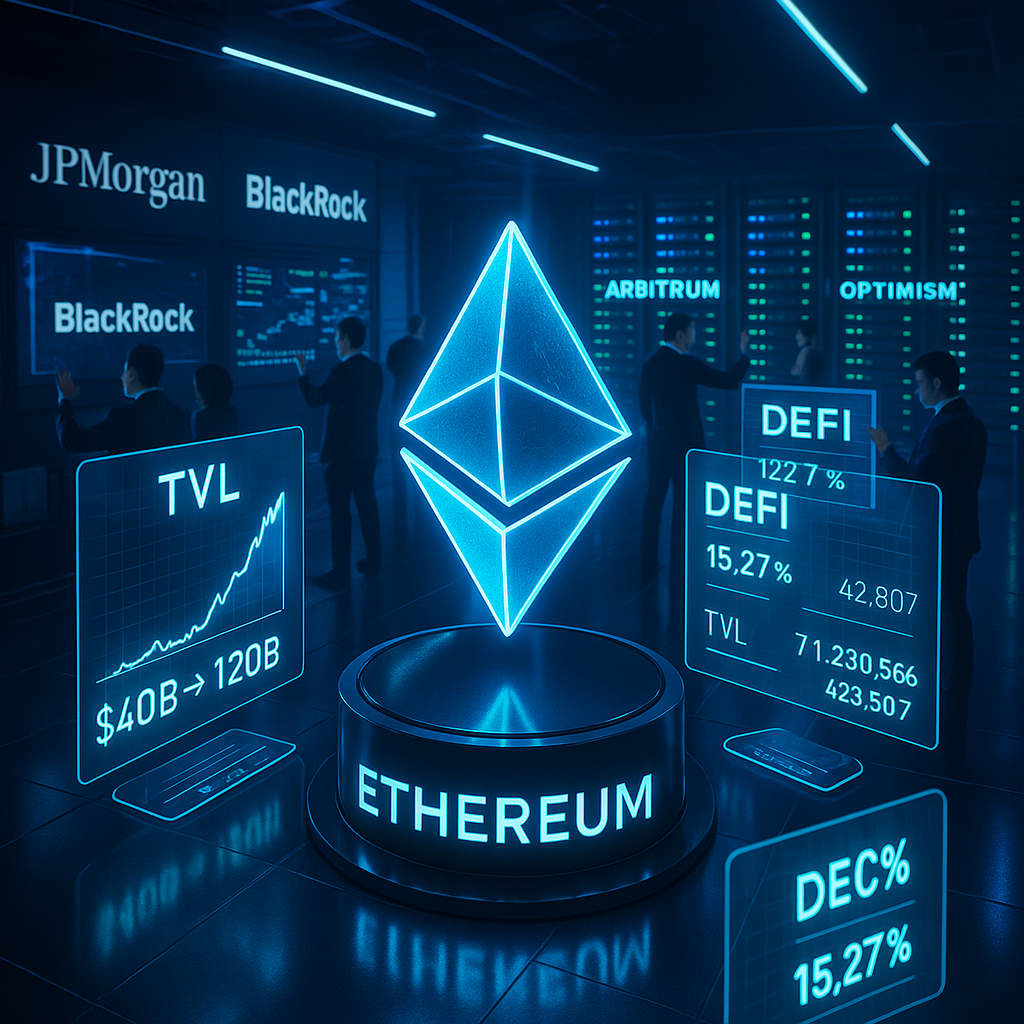
Market researchers at DappRadar estimate that Ethereum’s TVL could increase by 150% to 200% by 2026, reaching between $90 and $120 billion. This would mark a notable jump from its current level of around $40 billion.
Messari Research provides a more conservative outlook, suggesting growth of 120% to 150% within the same period. Their analysis considers possible market corrections and competition from other blockchains.
On average, six major research firms forecast approximately 160% growth in TVL over the next two years. These projections factor in both technical advancements and broader market conditions through 2026.
Drivers of Projected Growth
Technical Improvements
Ethereum’s technical upgrades are central to anticipated TVL growth. The 2022 transition to proof-of-stake, known as “The Merge,” cut energy consumption and paved the way for greater scalability.
Layer 2 scaling solutions such as Arbitrum and Optimism have already lowered transaction costs in some cases by up to 90%. These solutions help Ethereum process transactions more efficiently while maintaining security.
The forthcoming “Surge” upgrade will introduce sharding, dividing the network into smaller segments to boost transaction capacity and further reduce fees.
Institutional Adoption
Large financial institutions are increasing their involvement with Ethereum-based services. In the past year, firms like JPMorgan, BlackRock, and Fidelity initiated Ethereum initiatives, helping legitimize the network and attract additional capital.
The approval of Ethereum exchange-traded funds (ETFs) in multiple markets has created more accessible investment routes for traditional investors. These funds let participants gain exposure to Ethereum’s growth without managing the cryptocurrency themselves.
Companies are also diversifying their treasuries with Ethereum-based assets. Financial analyst Maria Rodriguez reported that some businesses now allocate portions of their holdings in Ethereum and stablecoins as a hedge against inflation.
Expanding DeFi Ecosystem
Ethereum’s DeFi applications are advancing beyond basic lending and trading. New use cases in insurance, derivatives, and asset management are drawing users who seek alternatives to traditional finance.
Integrating real-world assets (RWAs) into DeFi represents a major potential for expansion. Blockchain economist Thomas Chen highlighted that tokenizing assets such as real estate and securities could channel significant value into blockchain platforms.
Improvements in user experience are also making DeFi more accessible. Enhanced interfaces, educational resources, and stronger security measures address prior barriers and encourage broader adoption.
Potential Risks and Challenges
Regulatory Uncertainty
Shifting regulations pose both opportunities and risks for Ethereum. Clearer frameworks could boost institutional participation, but overly strict policies may hinder innovation and growth.
Jurisdictions vary widely in their approach. Some countries support blockchain innovation, while others implement restrictions that could fragment the global ecosystem.
Evolving compliance standards may increase costs for Ethereum-based projects. Smaller developers, with fewer resources, could find it challenging to keep up, potentially slowing expansion.
Technical Hurdles
Ethereum continues to face technical challenges despite improvements. During high activity periods, network congestion can still increase transaction fees and impact accessibility for those with lower capital.
Stay Sharp. Stay Ahead.
Join our Telegram Group for exclusive content, real insights,
engage with us and other members and get access to
insider updates, early news and top insights.
Join the Group
Security remains a concern as TVL grows. While Ethereum’s core protocol has proven resilient, vulnerabilities in applications built on top of it have resulted in losses.
Competition from other layer-1 blockchains, such as Solana, Avalanche, and Binance Smart Chain, adds further technical pressure. These rivals are introducing features aimed at capturing Ethereum’s user base.
Market Volatility
Cryptocurrency markets are subject to substantial price swings. Major downturns could reduce TVL by lowering asset values, regardless of user or application growth.
Macroeconomic factors including interest rates, inflation, and regulatory actions can influence investment in crypto assets. These external pressures make precise TVL projections challenging.
Market sentiment also affects adoption. Investment strategist David Lopez noted that TVL is likely to experience both rapid growth and contraction periods rather than follow a smooth path.
Expert Perspectives
Industry analysts remain cautiously optimistic about Ethereum’s TVL growth. Blockchain researcher Sarah Williams noted that the combination of technical upgrades and new use cases creates a strong narrative for continued expansion.
Some experts caution that growth targets may be too ambitious if technical upgrades encounter delays. Cryptocurrency analyst James Chen pointed out that previous Ethereum upgrades have occasionally taken longer than expected, affecting growth rates.
Ethereum co-founder Vitalik Buterin emphasized that sustainable growth is the goal. At the latest developer conference, he stated that the network’s purpose is to deliver genuine utility and inclusivity, not merely to maximize TVL as quickly as possible.
What This Means for Users
New Opportunities
As Ethereum’s ecosystem grows, users can expect access to a wider variety of financial services, including tokenized real estate and decentralized insurance.
Lower transaction fees from scaling solutions will make smaller transactions more practical, opening opportunities for users who were previously priced out.
Yield-generating options will likely expand beyond basic lending and liquidity provision. More sophisticated strategies could become available, offering new ways to participate and earn returns.
Practical Considerations
New users should approach Ethereum’s evolving ecosystem with careful research. While growth prospects are promising, individual applications can vary in risk and reliability.
Educational resources are vital as complexity increases. Utilizing trusted guides, official documentation, and reputable analysis can help newcomers make informed decisions.
Security remains critical. Safeguarding assets with hardware wallets, using two-factor authentication, and starting with small initial investments are recommended practices for those exploring Ethereum-based platforms.
Conclusion
Ethereum’s anticipated surge in total value locked reflects its expanding role in decentralized finance and growing institutional engagement, supported by continual technical upgrades and a broadening ecosystem. While these trends point to wider adoption, the network’s trajectory remains influenced by evolving regulations and market dynamics. What to watch: the effects of upcoming sharding upgrades and continued institutional involvement as 2026 approaches.




Leave a Reply