

Key Takeaways
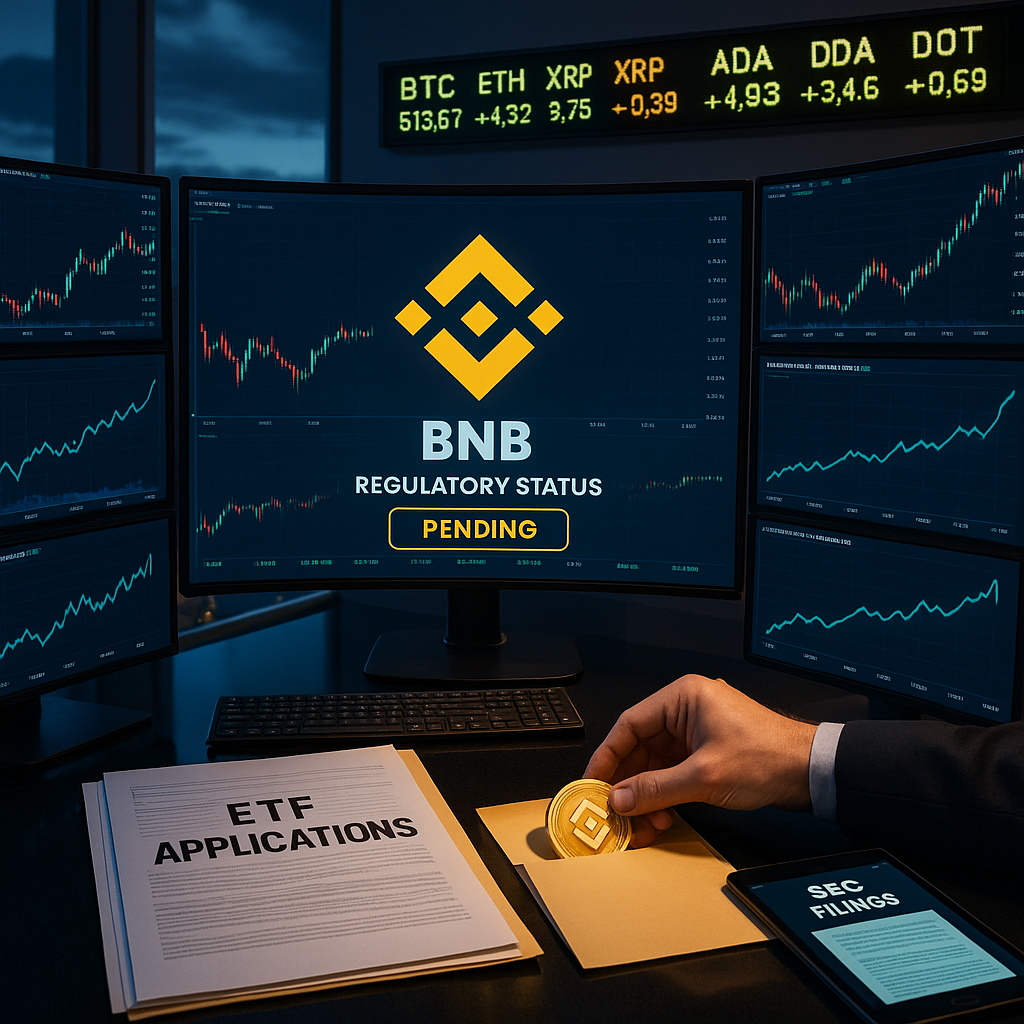
- ETF approval decision pending: U.S. regulators are reviewing applications for crypto ETFs, including products tied to Binance Coin and other leading altcoins.
- Potential for broader adoption: ETF approval could make it easier for everyday investors to access crypto markets through traditional brokerage accounts.
- Market volatility expected: BNB and major altcoins have shown increased price swings as the market anticipates a regulatory decision.
- Regulatory clarity a key factor: The upcoming decision will depend on ongoing regulatory assessment and the aim to balance innovation with investor protection.
- Timeline for verdict approaching: A decision on the ETF applications is expected within the next few weeks, with swift market responses anticipated.
Introduction
Binance Coin (BNB) and other major altcoins are receiving renewed attention as U.S. regulators consider approving new Exchange-Traded Funds (ETFs) tied to these digital assets. A decision is anticipated soon. This potential regulatory shift could make crypto investing more accessible to a wider audience, but also brings increased market volatility and signals changes in the digital asset landscape.
What’s Happening With Crypto ETFs
The U.S. Securities and Exchange Commission (SEC) is currently reviewing applications for Exchange-Traded Funds (ETFs) linked to Binance Coin (BNB) and several other prominent altcoins. This review follows the approval and January 2024 launch of Bitcoin spot ETFs.
Major financial services providers, such as BlackRock, Fidelity, and VanEck, have submitted applications for altcoin ETFs, extending beyond earlier Bitcoin offerings. These filings closely follow previous successful patterns, including amendments designed to address regulatory concerns.
A mid-June deadline has been set for the SEC’s initial decision, based on documents submitted to the agency. Industry experts note that this timing aligns with comments from Commissioner Hester Peirce about streamlining the review process after the Bitcoin ETF approval.
Stay Sharp. Stay Ahead.
Join our Telegram Group for exclusive content, real insights,
engage with us and other members and get access to
insider updates, early news and top insights.
 Join the Group
Why ETF Approval Matters
ETF approval would create a regulated investment vehicle for traditional investors, allowing them exposure to cryptocurrencies like Binance Coin without the complexities of direct ownership. This approach addresses concerns about wallet security, private key management, and the setup of exchange accounts, which often deter mainstream investors.
Michael Sonnenshein, CEO of Grayscale Investments, stated in a recent Bloomberg interview that ETFs help bridge the gap between traditional finance and crypto markets. He emphasized that ETFs use a familiar structure comfortable for financial advisors and institutional investors.
If approved, ETFs could open the door for billions in institutional capital that has previously avoided direct crypto exposure. Research from Bitwise Asset Management shows that about 64% of financial advisors would consider allocating to crypto ETFs, compared to only 15% willing to buy cryptocurrencies directly.
The initial success of Bitcoin ETFs, which attracted over $12 billion in inflows within three months, highlights the potential for altcoin ETFs to broaden market participation beyond traditional crypto investors.
BNB’s Position in the Altcoin Market
Binance Coin is currently the fourth-largest cryptocurrency by market capitalization and serves as the native token of the Binance ecosystem. BNB facilitates transaction fee discounts, supports participation in token sales, and acts as gas for the BNB Chain.
The token’s utility has expanded beyond its original purpose, now supporting decentralized applications, NFT marketplaces, and a variety of financial services. Binance CEO Changpeng Zhao noted in the company’s Q1 ecosystem report that BNB has evolved into a multi-chain utility asset.
Analysts from Messari Research point out that BNB’s established use cases and significant trading volume position it as a strong candidate for early altcoin ETF approval. Its stable regulatory profile, relative to some other altcoins, may also influence the approval process.
Regulatory Hurdles and Considerations
The SEC has a history of expressing concerns about market manipulation, custody solutions, and investor protection when reviewing crypto investment products. Such concerns led to multiple amendments before Bitcoin ETFs received approval.
Katherine Kirkpatrick, a partner at the law firm King & Spalding, explained that altcoin ETFs face additional scrutiny related to the underlying assets’ utility, decentralization, and potential security classification. These factors can result in varied approval timelines.
In its evaluations, the SEC looks at market liquidity, price discovery mechanisms, and surveillance-sharing agreements with regulated exchanges. BNB and other large-cap altcoins typically perform better on these criteria compared to smaller cryptocurrencies, possibly placing them earlier in the approval process.
Recent statements from SEC Chair Gary Gensler stress that each digital asset will be reviewed individually, not as part of a group. This suggests that ETF approvals may arrive in stages rather than all at once.
Market Impact and Investor Sentiment
Crypto markets have become more sensitive to ETF developments, with BNB prices often reacting to news about applications and regulatory commentary. Spikes in trading volumes tend to coincide with ETF-related updates.
According to a recent JPMorgan survey of asset managers, institutional investors are beginning to plan for potential ETF approvals. The survey indicated that 45% of respondents are actively preparing strategies for altcoin exposure if regulated products become available.
Retail investor sentiment remains cautiously optimistic. Google search trends and data from LunarCrush both reflect rising interest and a 37% increase in positive discussions about regulated crypto products.
Analysts remain divided on short-term price effects. Noelle Acheson, author of “Crypto Is Macro Now,” noted that while expanded accessibility should have positive long-term outcomes, immediate market responses may be difficult to predict due to the common “buy the rumor, sell the news” pattern in crypto.
Implications for the Broader Crypto Ecosystem
Approving ETFs for altcoins would mark significant regulatory validation beyond Bitcoin, potentially shaping standards for digital asset classification. Such decisions could clarify which tokens may receive similar regulatory treatment in the future.
Stay Sharp. Stay Ahead.
Join our Telegram Group for exclusive content, real insights,
engage with us and other members and get access to
insider updates, early news and top insights.
Join the Group
Developers and projects might adjust governance and transparency practices to reflect the evolving regulatory landscape. Some industry self-regulation initiatives already aim to address SEC concerns.
Additional ETF products would provide new options for traditional financial institutions, potentially accelerating crypto adoption in wealth management and pension funds. Caitlin Long, CEO of Custodia Bank, recently stated that each regulated product serves as a new on-ramp for traditional capital.
The timing of ETF approvals could also influence crypto market cycles. Analysts observe that regulatory developments now play a greater role than Bitcoin halvings in driving significant market movements.
What to Watch Next
The SEC’s first deadline for an altcoin ETF decision is June 15, with additional decisions expected throughout the summer. The Commission may request further information or amendments before the deadline, indicating specific concerns.
Binance’s next quarterly transparency report, scheduled for release on Tuesday, will offer context on institutional activity and regulatory compliance. This report often details updates to BNB tokenomics and ecosystem developments.
Congressional hearings on digital asset regulation are planned for late May and may provide insight into lawmakers’ positions on crypto investment products. Previous hearings have influenced regulatory direction in this area.
Global regulatory developments, especially from Hong Kong, Singapore, and the European Union, could impact U.S. decisions as international coordination increases. The European Union’s Markets in Crypto Assets (MiCA) framework will begin its phased rollout next month.
Conclusion
The SEC’s upcoming decisions on Binance Coin and altcoin ETFs represent a pivotal step in connecting traditional finance with digital assets, setting new standards for industry growth and investor participation. As regulatory progress accelerates crypto’s integration into mainstream finance, attention turns to initial SEC rulings expected by June 15, the upcoming Binance transparency report, and key Congressional hearings later in May.




Leave a Reply