
Key Takeaways
Ethereum’s token standards serve as foundational pillars for decentralized applications, digital collectibles, and the rapidly evolving landscape of digital finance. For developers, project leaders, and anyone navigating the Web3 ecosystem, understanding the clear distinctions between ERC20, ERC721, and ERC1155 is crucial. The following insights clarify their roles, technical differences, security implications, and how these technologies can be strategically applied across projects.
-
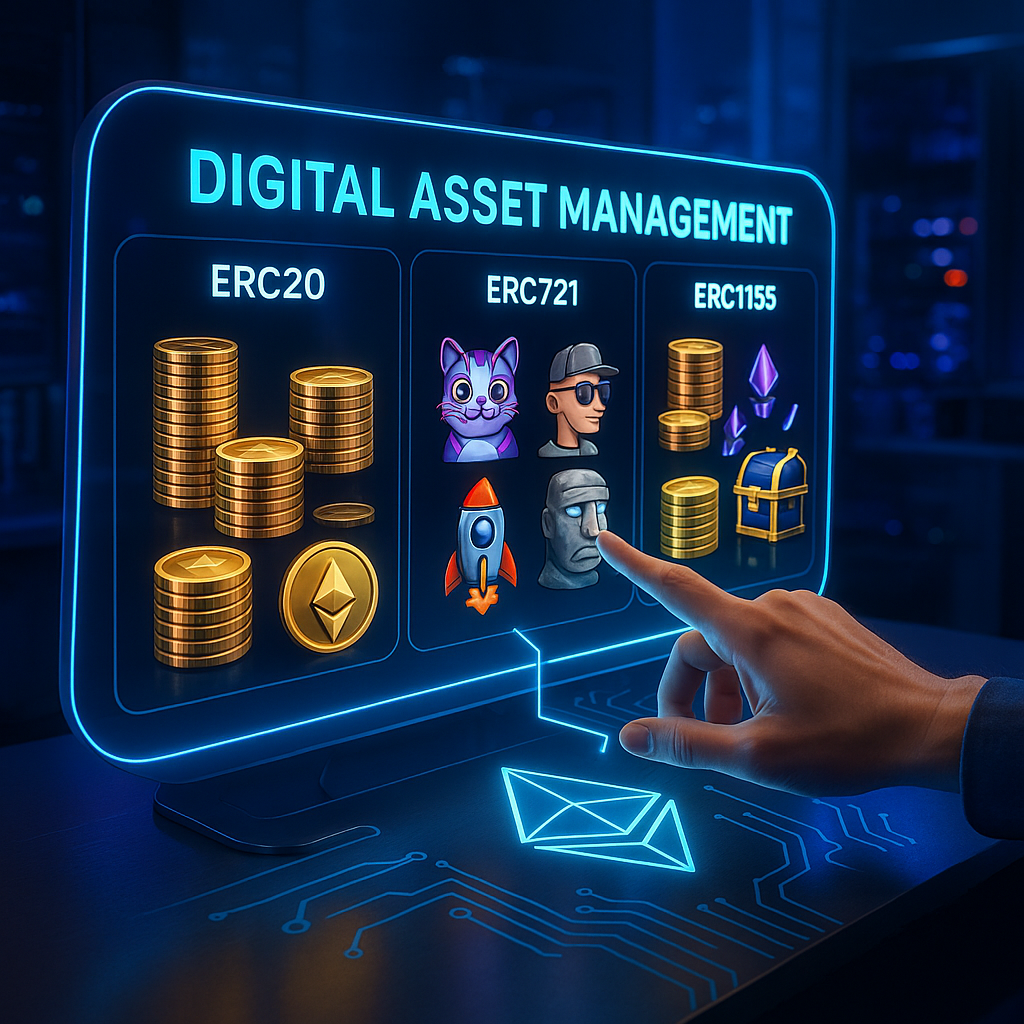
ERC20 enables seamless, interoperable value transfer. Recognized as the backbone for fungible tokens, ERC20 powers stablecoins, governance tokens, and utility assets. Its standardized interface ensures tokens can move freely across wallets, exchanges, and DeFi protocols, making it the industry’s default for interchangeable value.
-
ERC721 empowers digital ownership and uniqueness. As the primary standard for non-fungible tokens (NFTs), ERC721 makes each token one-of-a-kind. This unlocks new possibilities for digital art, collectibles, real estate, and certification markets, guaranteeing provenance and uniqueness for every asset.
-
ERC1155 amplifies efficiency through multi-token support. By enabling both fungible and non-fungible tokens within a single smart contract, ERC1155 streamlines asset management, reduces gas fees, and simplifies development for complex platforms, especially in gaming, DeFi, and any multi-asset environment.
-
Technical architecture shapes operational costs and scalability. ERC1155 offers significant gas and code optimization through batch operations and multi-type management. This advantage is vital for high-volume applications that demand low fees and large-scale asset transfers.
-
Composability unlocks powerful project integrations. Innovative developers can combine ERC20 (currencies), ERC721 (rare collectibles), and ERC1155 (in-game items or multi-assets) into unified environments, enabling interoperable, flexible features that enhance user experience in everything from gaming to metaverse platforms and beyond.
-
Security considerations differ across standards. ERC20 and ERC721 demand rigorous control over approval and transfer mechanisms, while ERC1155 introduces complexities in batch operations and asset type management. Proactive auditing and robust smart contract security are essential regardless of which standard is used.
-
Choose the standard that matches your use case, not just what’s popular. Evaluate the project’s needs: opt for ERC20 with interchangeable assets, select ERC721 for unique items, or deploy ERC1155 for dynamic, multi-purpose ecosystems. Always weigh scalability, complexity, and future requirements before deciding.
Decoding Ethereum’s token standards is more than a matter of technical preference. It’s about strategically selecting or blending these frameworks to match your vision and use case. With these foundations, you’re equipped to design, implement, or invest in projects that maximize efficiency, innovation, and stability. Let’s now explore each standard, their technical designs, and their ideal use cases in detail.
Introduction
Every time you initiate a token transfer, mint a digital collectible, or join a blockchain-powered game, you interact with Ethereum’s core building blocks: token standards. The choice among ERC20, ERC721, and ERC1155 defines not only how digital assets move but also affects security, scalability, and the creativity possible in decentralized finance, NFT markets, and emerging Web3 applications.
A clear grasp of these Ethereum token standards is critical for anyone architecting blockchain solutions, assessing security models, or charting new territory in decentralized ecosystems. In the following sections, we’ll break down the frameworks behind fungible tokens, unique NFTs, and multi-type contracts. This guide will help you compare technical pros and cons, spot potential risks, and chart the right course for your project or investment.
Stay Sharp. Stay Ahead.
Join our Telegram Group for exclusive content, real insights,
engage with us and other members and get access to
insider updates, early news and top insights.
 Join the Group
Understanding Ethereum Token Standards
Ethereum’s ecosystem is built on standardized token interfaces to ensure reliable compatibility, smooth interoperability, and widespread adoption across the blockchain. Each token standard has a specific role, shaped by technical needs and real-world utility, and brings its own set of requirements and behaviors. To use these standards effectively, developers and decision-makers must understand their unique designs and use cases.
Token Standards: Core Concepts
Token standards in Ethereum act like “rules of the road” for digital assets, specifying how tokens behave, interact, and update records on-chain. They establish essential elements such as:
- Required functions that every compliant smart contract must include
- Event emissions to notify external services and applications about token transactions
- Interface compliance for seamless compatibility with wallets, exchanges, and third-party apps
- Consistent method signatures so code can interact predictably regardless of the token
Although all token standards operate on the Ethereum Virtual Machine (EVM), their architectural models significantly influence how token types are handled, ownership is tracked, and transactions are processed.
Let’s build on this foundation by exploring the strengths and trade-offs of each major standard.
ERC20: The Fungible Token Standard
ERC20 introduced the concept of fungible tokens to Ethereum, providing the launchpad for countless applications ranging from digital currencies to reward points and governance systems. This standard has become a mainstay for both public and private blockchain ecosystems.
Technical Implementation
At its core, ERC20 defines a set of interface functions that manage token balances and facilitate interactions between addresses. Here’s a simplified look at its interface:
interface IERC20 {
    function totalSupply() external view returns (uint256);
    function balanceOf(address account) external view returns (uint256);
    function transfer(address recipient, uint256 amount) external returns (bool);
    function allowance(address owner, address spender) external view returns (uint256);
    function approve(address spender, uint256 amount) external returns (bool);
    function transferFrom(address sender, address recipient, uint256 amount) external returns (bool);

    event Transfer(address indexed from, address indexed to, uint256 value);
    event Approval(address indexed owner, address indexed spender, uint256 value);
}
A key element is the straightforward mapping of user addresses to their balances:
mapping(address => uint256) private _balances;
Key Characteristics
ERC20 tokens share several hallmark properties:
- Fungibility: Every token unit is exactly the same as another, ensuring interchangeability and broad liquidity.
- Divisibility: Tokens can often be split into tiny fractions, commonly up to 18 decimal places.
- Single asset focus: A single token type is governed by each contract.
- Balance-based structure: The ledger keeps track of cumulative balances per address, not individual tokens.
Strengths and Limitations
Strengths:
- High efficiency and low transaction fees for basic transfers
- Universal adoption by wallets, exchanges, and DeFi protocols across the globe
- Simple, transparent implementation and robust security through extensive audits
- Predictable, stable performance in high-velocity transaction environments
Limitations:
- No support for unique (non-fungible) assets or individualized metadata
- Each token type requires its own contract; no built-in multi-asset support
- Limited to single transfers without custom batch logic
- Unsuitable for representing one-of-a-kind items or collectibles
ERC20 is ideal for any scenario where “a token should always be the same as every other token,” such as currencies, liquidity pool shares, or voting rights. However, complexity arises when projects require uniqueness or require users to manage a portfolio of different assets in a single space.
ERC721: The Non-Fungible Token Standard
ERC721 unlocked a new digital frontier by enabling non-fungible tokens (NFTs), forever changing how we conceptualize ownership and authenticity in the digital world. From art to property deeds, this standard allows users to own unique, traceable assets directly on-chain.
Technical Implementation
Where ERC20 tracks balances, ERC721 monitors the specific ownership of unique token IDs. Its standard interface includes:
interface IERC721 {
    function balanceOf(address owner) external view returns (uint256 balance);
    function ownerOf(uint256 tokenId) external view returns (address owner);
    function safeTransferFrom(address from, address to, uint256 tokenId) external;
    function transferFrom(address from, address to, uint256 tokenId) external;
    function approve(address to, uint256 tokenId) external;
    function getApproved(uint256 tokenId) external view returns (address operator);
    function setApprovalForAll(address operator, bool _approved) external;
    function isApprovedForAll(address owner, address operator) external view returns (bool);

    event Transfer(address indexed from, address indexed to, uint256 indexed tokenId);
    event Approval(address indexed owner, address indexed approved, uint256 indexed tokenId);
    event ApprovalForAll(address indexed owner, address indexed operator, bool approved);
}
A typical structure involves:
// Maps each unique token ID to its owner
mapping(uint256 => address) private _owners;

// Tracks the number of tokens owned by each address
mapping(address => uint256) private _balances;
Metadata Extension
ERC721 includes an optional metadata extension, crucial for storing information about each unique token:
interface IERC721Metadata {
    function name() external view returns (string memory);
    function symbol() external view returns (string memory);
    function tokenURI(uint256 tokenId) external view returns (string memory);
}
This tokenURI function allows each individual token to point to images, attributes, descriptions, or certifications, supporting everything from generative art to credentials and supply chain information.
Stay Sharp. Stay Ahead.
Join our Telegram Group for exclusive content, real insights,
engage with us and other members and get access to
insider updates, early news and top insights.
Join the Group
Key Characteristics
ERC721 sets itself apart by offering:
- Non-fungibility: Each token is truly unique; no two are alike.
- Direct, granular ownership: Each token ID belongs to a single owner, with full traceability.
- Indivisibility: Tokens cannot be split; they always transfer as whole units.
- Rich metadata support: Assets can carry detailed information, unlocking creative and commercial potential.
- Individualized permissions: Approvals are handled per token, rather than globally.
Strengths and Limitations
Strengths:
- Ideal for unique digital art, certificates, collectibles, and real-world assets like event tickets or real estate deeds
- Deep metadata integration empowers richer user and developer experiences
- Advanced, granular ownership and permissioning
- Standard for NFT platforms and marketplaces worldwide
Limitations:
- Higher gas fees per transaction than ERC20, due to individualized token management
- Poor scalability for large-scale operations, such as games with thousands of items, unless further optimized
- No batch transfer support in the base protocol
- Each asset requires a separate transaction for transfer, increasing overall costs and latency
ERC721 is the go-to when one-of-a-kind ownership or proof of authenticity matters. Use cases span from artwork on global marketplaces to academic degrees, supply chain tracking, and gaming avatars.
ERC1155: The Multi-Token Standard
ERC1155 arrived as an answer to the growing need for flexible, scalable token systems. Blending features from both ERC20 and ERC721, it streamlines asset management while minimizing transaction overhead. This is especially valuable for dynamic applications like blockchain gaming, multi-asset platforms, and even enterprise operations.
Technical Implementation
ERC1155’s architecture is designed for maximum efficiency and flexibility. Its interface supports advanced features such as batch transfers and multi-token management:
interface IERC1155 {
    function balanceOf(address account, uint256 id) external view returns (uint256);
    function balanceOfBatch(address[] calldata accounts, uint256[] calldata ids) external view returns (uint256[] memory);
    function setApprovalForAll(address operator, bool approved) external;
    function isApprovedForAll(address account, address operator) external view returns (bool);
    function safeTransferFrom(address from, address to, uint256 id, uint256 amount, bytes calldata data) external;
    function safeBatchTransferFrom(address from, address to, uint256[] calldata ids, uint256[] calldata amounts, bytes calldata data) external;

    event TransferSingle(address indexed operator, address indexed from, address indexed to, uint256 id, uint256 value);
    event TransferBatch(address indexed operator, address indexed from, address indexed to, uint256[] ids, uint256[] values);
    event ApprovalForAll(address indexed account, address indexed operator, bool approved);
    event URI(string value, uint256 indexed id);
}
Tokens are managed through a nested mapping:
// Token ID maps to addresses, which map to balances
mapping(uint256 => mapping(address => uint256)) private _balances;
Key Characteristics
ERC1155 introduces several game-changing features:
- Multi-asset management: A single contract can oversee countless token types (both fungible and non-fungible), minimizing development and deployment costs.
- Batch transfer operations: Multiple different token types and amounts can move in one transaction, drastically reducing network load and user fees.
- Semi-fungibility: Tokens can be divisible (like game gold) or truly unique (like legendary weapons), supporting both ERC20 and ERC721 logic.
- Optimized gas efficiency: Lower transaction costs make it the standard for gaming, large NFT collections, loyalty programs, and DeFi innovations.
- Atomic swaps and operations: Assets can change hands in a single transaction, supporting advanced applications with complex rules.
Strengths and Limitations
Strengths:
- Unifies and simplifies management of diverse digital assets in one contract
- Native batch transfer and approval features streamline operations and reduce costs
- Significant savings for large, multi-asset ecosystems such as games, retail loyalty platforms, and ticketing systems
- Increasing support across wallets, exchanges, and NFT marketplaces
Limitations:
- Has a steeper learning curve and increased complexity in development and security
- Not as universally supported as ERC20 or ERC721 yet, though ecosystem adoption is growing rapidly
- Requires careful design to avoid pitfalls in permission and batch logic, especially where assets have vastly different properties
ERC1155 is shaping the future for platforms that demand high scalability, operational efficiency, and the ability to manage millions of digital items (both unique and identical) in real-time.
Diverse Real-World Applications Across Industries
Ethereum’s token standards are driving innovation far beyond digital art or cryptocurrency trading. Across industries, these frameworks enable transformative solutions:
- Healthcare: Hospitals use ERC721 to manage and track unique medical credentials or patient records as secure NFTs. ERC20 tokens can represent patient loyalty rewards or health data exchange credits. ERC1155 could manage diverse digital health assets, such as prescriptions and insurance tokens, in unified patient wallets.
- Finance: ERC20 underpins stablecoins, decentralized lending, and payment tokens. ERC1155 opens doors to portfolios containing a mix of stocks, bonds, and unique assets for instant swaps. ERC721 is used for tokenized real estate and securitized collectibles.
- Education: Academic institutions issue diplomas as verifiable ERC721 NFTs. ERC1155 facilitates the distribution of digital textbooks, certificates, and micro-credentials within a single platform.
- Legal: ERC721 proves digital signatures or property rights, while ERC20 automates payments for legal services. ERC1155 can manage bundles of legal contract tokens and compliance digital assets.
- Retail & E-commerce: Loyalty points are issued as ERC20 tokens. ERC721 creates traceable digital ownership for limited-edition merchandise. ERC1155 manages coupons, mixed-asset bundles, or rewards efficiently in consumer platforms.
- Environmental Science: Organizations use ERC721 tokens for tracking unique carbon credits or resource rights. ERC20 powers micro-incentives for sustainable actions. ERC1155 allows for bundling and trading diverse environmental assets within transparent, multi-asset registries.
By leveraging these standards, organizations across sectors unlock verifiable ownership, programmable value transfer, and auditable transparency, all while reducing operational costs and friction.
Conclusion
Ethereum’s token standards (ERC20, ERC721, and ERC1155) form the backbone of decentralized finance, digital identity, gaming economies, and so much more. Understanding their fundamental differences empowers innovators to select, combine, and implement the right technology, maximizing efficiency, user trust, and market reach.
Looking forward, the boundaries between these standards will continue to blur as new applications demand greater interoperability and customization. The most successful projects will be those that understand not only the technical frameworks but also how to blend them for real-world impact. In this rapidly shifting Web3 landscape, your ability to navigate these standards confidently will determine competitiveness, resilience, and the power to shape tomorrow’s decentralized economy.
Whether you are launching a utility token, pioneering an NFT collection, building a multi-industry platform, or seeking to understand the future of blockchain, mastering Ethereum’s token standards is your gateway. The challenge is no longer if you will use these standards, but how thoughtfully and effectively you will leverage them to unlock new value in our digital world. Learn. Earn. Repeat.




Leave a Reply